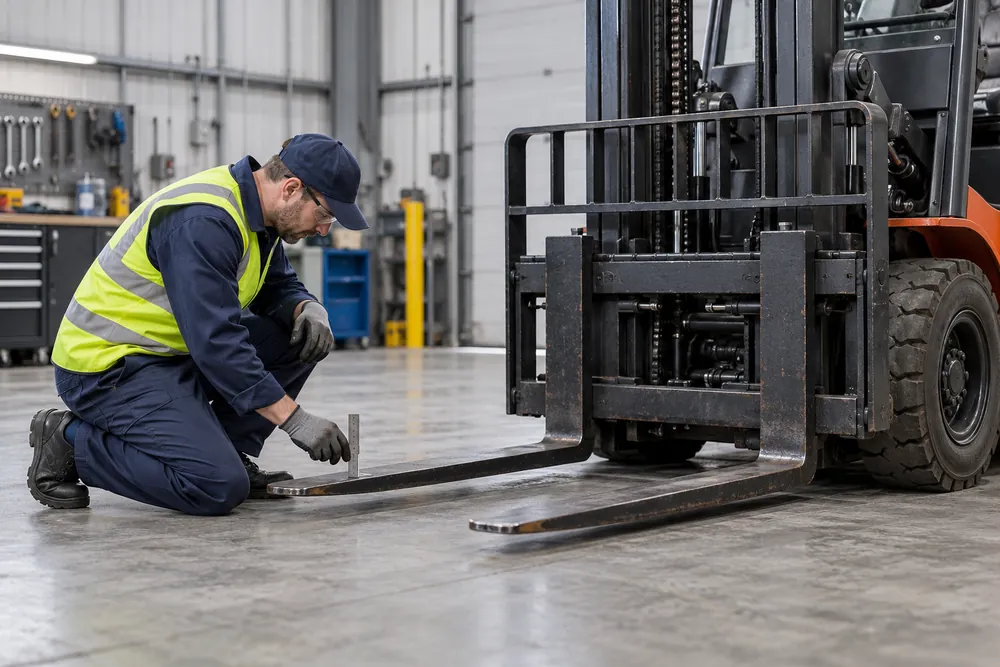
What A Thorough Examination Is For
A forklift thorough examination is a detailed assessment of relevant safety-critical equipment by a competent person. Buyers often call it a LOLER inspection or forklift test. The important outcome is a suitable examination and a written report identifying the machine, findings and any action required.
The Lifting Operations and Lifting Equipment Regulations 1998, known as LOLER, cover the truck’s lifting equipment. The Provision and Use of Work Equipment Regulations 1998, known as PUWER, address other work equipment safety matters. HSE’s lift-truck guidance explains that examination needs attention to both lifting and other safety-related parts, such as steering and brakes.
A routine service is not a substitute for thorough examination. Nor does a sticker prove that the full scope has been covered or that identified defects have been resolved. Ask for the written report and keep it available with the machine’s maintenance records.
Check The Due Date And The Examination Scheme
For goods-lifting equipment, the normal LOLER interval is at least every twelve months unless a competent person’s written examination scheme sets a different interval (HSE, LOLER guidance). Equipment lifting people and lifting accessories normally require at least six-monthly examination, or an appropriate written scheme (HSE, LOLER guidance). These are legal examination intervals, not a servicing schedule.
Do not select an interval solely because it is common for another truck. The machine, its attachments, working conditions and examination scheme all matter. A competent person may identify a need for a different approach where the equipment faces demanding conditions.
An examination may also be needed following exceptional circumstances that could affect safety. Examples include damage or major changes, which need assessment rather than a casual assumption that the existing report remains enough. Send details of recent repairs or incidents when requesting an examination so the competent person can determine the appropriate scope.
Prepare The Truck And Its Records
Start with the make, model, serial number and last report of thorough examination. Include the next due date and any defects already noted. If attachments are used, identify them clearly and explain how they are paired with the truck.
Provide the service history, relevant instructions and information about recent repairs. An examiner needs a realistic picture of how the machine is used, including unusual loads and any work environment that accelerates deterioration. Hired and leased trucks should be identified as such so responsibilities and report recipients can be confirmed.
Arrange suitable access and an agreed period when the equipment can be taken out of normal operation. Keep the examination area separate from moving traffic and provide site induction details where needed. The examiner will determine what access, testing or further information is required for the specific equipment.
What To Expect From The Examination
The competent person assesses the relevant equipment and safety-critical parts using an approach appropriate to the machine. The scope should address the lifting arrangement and relevant non-lifting safety items. Ask how the examination deals with the actual attachments, rather than assuming that a general truck report covers every accessory kept on site.
The person carrying out the examination needs the practical and theoretical knowledge and experience to identify defects and assess their significance. HSE also stresses sufficient independence and impartiality. If maintenance and examination are arranged together, the examiner should be able to assess the machine objectively rather than simply approve their own repair work.
The report should make the findings clear. It is not the same document as a service checklist, a repair estimate or an operator’s pre-use record. Request clarification if the identity, scope or required action is unclear, and do not reduce the outcome to a pass label without reading the findings.
Act On Defects And Keep The Report
Some defects require immediate action and the equipment must not continue to be used where it is unsafe. Others may have a stated period for correction. Follow the examiner’s written findings and arrange the appropriate repairs, keeping evidence of the action taken.
The competent person has reporting duties for defects that are, or could become, a danger to people. This may include notifying the relevant enforcing authority under LOLER. An examination booking is not a way to defer action on a known dangerous condition until a convenient date.
Retain the report for the period required for its type and circumstances. HSE provides specific record-retention guidance, so check the relevant category rather than relying on a single rule for every document. Keep the next examination date visible to the people responsible for scheduling equipment use.
Costs And Related Maintenance
The price of a forklift examination depends on the machine, attachments, access, location and agreed scope. Multiple trucks may need coordinated access, and missing records or extra assessment can affect the work required. Ask whether travel, reporting and any follow-up visit are included.
Remedial work is normally a separate consideration from examining the equipment. If a defect needs repair, request a clear proposal and confirm whether further examination is required before return to use. Our forklift repair and servicing pages explain how those tasks fit alongside the examination process.
For a hire truck, agree in writing who arranges examination during the hire period and who receives the report. The business using the equipment still needs to satisfy itself that the machine is suitable and safe. Good scheduling connects examination, maintenance and daily checks without treating them as interchangeable tasks.
Questions About Forklift LOLER Inspections
Is LOLER The Same As Forklift Servicing?
LOLER thorough examination is separate from forklift servicing. A service maintains the machine, while examination assesses relevant safety-critical parts and produces a statutory report. You may arrange both, but the tasks, competence and records must be clear. Read the examination findings and act on defects even if routine maintenance has recently been completed.
Does A Hired Forklift Need An Examination?
A hired forklift used for lifting at work needs appropriate thorough examination arrangements. Check the current report before use and agree responsibility for future examinations in writing, especially for longer hires. Keep the report available and act on defects. Hiring equipment does not remove the user’s responsibility to satisfy themselves that it is safe.