Hire Around The Work You Need To Do
Forklift hire starts with the job rather than a truck model. A loading bay handling incoming pallets has different requirements from a production line feeding bulky components or a yard unloading irregular deliveries. Tell us what moves, where it moves and how often, and we can help define a suitable hire specification.
Short-term forklift rental can cover a busy trading period, a stock move or a gap while your existing machine is repaired. Longer hire suits a continuing need where outright purchase is not the preferred route. Availability, delivery arrangements and the precise support included must be confirmed in a written quotation before you commit.
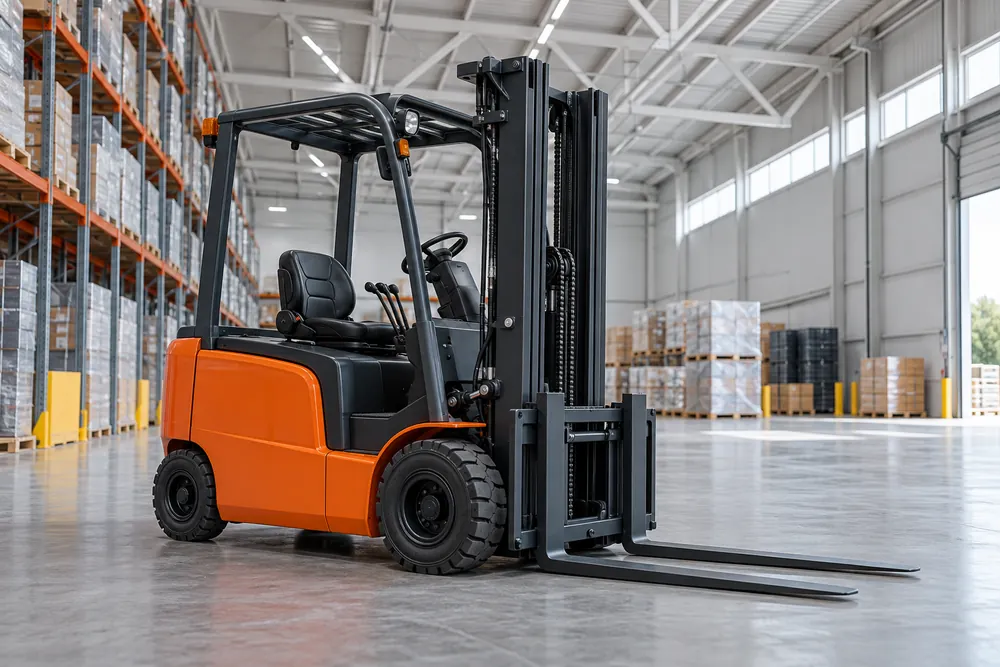
A counterbalance truck carries its load ahead of the front wheels, with the truck providing the balancing weight. It is a practical starting point for many general handling jobs, but it needs enough room to turn and stack. For tall racking and tighter indoor aisles, compare our reach truck hire service before choosing.
Specify Capacity At The Working Height
The weight printed on a truck does not answer every capacity question. The load centre, lift height, mast and any attachment affect how much it can safely handle. Give the actual maximum load weight and dimensions, including the pallet or stillage, rather than an average weight from a normal day.
Long loads and loads with an uneven centre of gravity need particular attention. Side shifts, clamps and fork extensions must be compatible with the machine and reflected in its rated capacity information. An attachment is not a reason to assume that the original lifting capacity remains available.
Measure the lowest doorway as well as the highest storage position. Include shutters, overhead services and any route between buildings. A truck that can lift to the top beam may still be unable to pass through the entrance with its mast lowered.
Choose Power And Tyres For Your Site
Electric trucks are useful where indoor exhaust emissions are a concern, but charging arrangements need planning. Confirm the charger supply, battery type and available charging periods. Multi-shift work may need a different energy plan from occasional unloading, so describe the duty cycle rather than just the opening hours.
LPG and diesel options require a careful assessment of the work environment and ventilation. Outdoor use also brings surface, gradient and weather considerations. Wheel and tyre selection must suit the actual travel route, including joints, thresholds and any uneven areas.
Do not assume a warehouse forklift is suitable for rough ground. Send photographs of the yard if the surface is uncertain, and explain whether the truck will cross public roads. Public-road use needs a separate check of the applicable vehicle, driver and insurance requirements before it is agreed.
From Enquiry To Collection
First, send the load details, site postcode, preferred start date and likely duration. Include access restrictions for the delivery vehicle and explain how the machine can be unloaded. A ground-level handover may need a different transport arrangement from delivery to a suitable loading dock.
Next, review the proposed truck specification and the hire terms. Confirm delivery and collection charges, included hours, fuel or charging requirements, breakdown reporting and any damage exclusions. Ask who will arrange servicing and examination if the hire crosses an existing due date.
At handover, check the machine identity, instructions, condition record and relevant examination paperwork. Agree a safe unloading area away from pedestrians. At the end of hire, follow the collection instructions and keep a record of the truck condition and any accessories being returned.
Safety Duties During A Hire
The Provision and Use of Work Equipment Regulations 1998, known as PUWER, apply to hired equipment used at work. Employers must select suitable equipment and provide appropriate instruction and training. Hiring a truck does not remove the need for a safe traffic plan and authorised operators familiar with the specific machine.
The Lifting Operations and Lifting Equipment Regulations 1998, known as LOLER, also apply to the lifting work. Check that the current report of thorough examination covers the truck and relevant attachments. Keep daily pre-use checks separate from servicing and examination, and take a truck out of use when a safety defect is identified.
What Affects Your Hire Quote
Hire cost depends on the truck type, capacity, mast, power source, length of hire and expected operating hours. Transport, site access, attachments and the service package can change the total. Compare written quotations on the whole job, including delivery and collection, rather than on the weekly charge alone.
If the hire duration is uncertain, ask how extensions are agreed and what notice is needed for collection. For a continuing requirement, compare forklift leasing with rental on the same specification. We can use your site and workload details to help you ask for a clear, relevant quotation.
Questions About Forklift Truck Hire
Can I Hire A Forklift Without A Driver?
Forklift hire without a driver is commonly called self-drive hire. Your business must provide suitably trained and authorised operators, including familiarisation with the specific truck and site. A training certificate alone does not settle every competence question. Tell us if you need an operated solution so that this can be checked separately before a quotation.
What Is Included In Forklift Hire?
Forklift hire inclusions depend on the written agreement, truck and duration. Check servicing, breakdown attendance, operating-hour limits, examination responsibilities, attachments and charging equipment. Delivery, collection, consumables and damage may be separate. Ask for each item to be set out before booking so you can compare the full cost of suitable options.