Start With The Fault, Not A Guess
A forklift that will not lift may have a very different problem from one that will not travel. Intermittent faults also need context, including the load, temperature and stage of the shift. A useful repair enquiry describes what changed and when it happened rather than asking for a particular component to be replaced.
Send the truck make, model and serial number with the hour reading if available. Note any display code exactly as shown, and explain whether the issue is constant or occasional. Photographs can help identify the machine and visible damage, but they do not replace a competent inspection.
Forklift repair enquiries in Birmingham can involve an owned truck, a leased machine or hired equipment. If it is hired or covered by an existing maintenance agreement, contact the responsible provider before arranging outside work. Unapproved repairs can complicate the contract and make the machine’s maintenance history unclear.
Common Reasons To Request A Repair
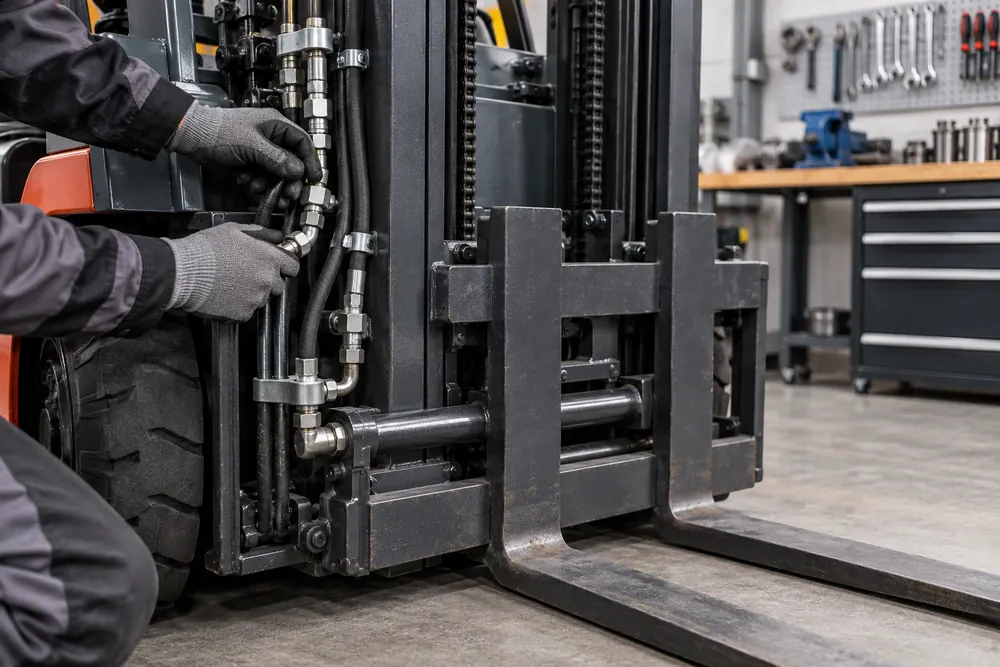
Hydraulic leaks, slow lifting and unusual mast movement need investigation of the relevant system and the conditions in which the fault occurs. A wet hose is not always the original leak source. Do not use hands to find a pressurised hydraulic leak, and do not work beneath raised forks or an unsupported load.
Electrical symptoms can include charging problems, damaged connectors, intermittent travel and control faults. The engineer may need model-specific diagnostic access and a clear description of what the display shows. Battery, charger and truck faults can produce similar symptoms, so replacing a battery without diagnosis may miss the cause.
Braking, steering, tyre and drive faults affect safe movement around people and stock. Impact damage may involve more than the visibly bent part, especially around the mast or overhead guard. Explain any collision, overload or unusual event honestly so the repair assessment can cover the relevant risks.
What To Do While Waiting For Assessment
If a defect could affect safety, stop using the truck and follow your site isolation procedure. Remove it from the working fleet and make its status clear to other operators. Only move or isolate equipment within your training and the manufacturer’s instructions, especially if a load is stranded or stored energy remains.
Keep people away from a disabled machine and any unstable load. Do not restart a truck repeatedly to see whether the fault disappears. If there is an immediate danger, use your workplace emergency arrangements rather than treating an online enquiry as an emergency response.
Gather the handbook, maintenance records and current examination report if available. These help the engineer understand earlier work and any outstanding defects. A clear photograph of an error display is often more useful than a general description such as ‘electrical problem’, provided taking it is safe.
Diagnosis, Approval And Repair
The first stage is to agree an assessment, including travel, diagnostic time and any site requirements. The engineer checks the reported symptoms and decides whether the truck can be worked on safely where it stands. Some jobs may need workshop facilities, lifting equipment or specialist support.
Once the fault is understood, ask for a repair proposal identifying the parts, labour and any additional work found. Parts availability and the need for further testing affect completion. Do not assume that an initial visit guarantees a completed repair or that every model can be supported without checking first.
After the agreed repair, the machine needs checks appropriate to the work completed before return to use. Request a repair record and clarity about any remaining restrictions or recommendations. Repairs to lifting components or exceptional events may also trigger a separate thorough examination, which should be assessed by a competent person.
The Safety Framework For Repairs
The Provision and Use of Work Equipment Regulations 1998 apply to equipment condition and safe maintenance. HSE guidance requires maintenance to be properly planned and undertaken by people with the necessary competence. Isolation must address electrical, hydraulic and other stored energy rather than relying only on switching off the ignition.
The Lifting Operations and Lifting Equipment Regulations 1998 remain relevant to the truck’s lifting function. A repair invoice does not replace the report of thorough examination. Where the work or incident changes the need for examination, confirm the required scope before putting the truck back into lifting service.
Your workplace arrangements matter as much as the workshop task. Provide access, an induction where needed and a safe space away from traffic. A repair should not be rushed in an active loading lane simply because the machine is blocking a normal route.
Repair Costs And Temporary Cover
Repair cost depends on diagnostic time, travel, parts, labour and whether the work can be completed on site. Older machines may need a parts availability check before a reliable decision can be made. Ask how additional work will be approved if the first inspection reveals more than the original symptom suggested.
Compare the repair proposal with the machine’s condition and continuing workload. If downtime is the immediate problem, temporary forklift truck hire may provide cover after the replacement specification is checked. A planned servicing schedule can then address recurring maintenance issues once the immediate repair is resolved.
Questions About Forklift Repair
Can A Forklift Be Repaired On Site?
Forklift repairs can sometimes be completed on site if the fault, working space and available equipment make that safe. Other repairs need workshop facilities or specialist diagnostics. Share the model and symptoms before arranging a visit, and ask whether the quotation covers assessment only or an agreed repair with parts.
Can I Use A Forklift With A Hydraulic Leak?
A forklift with a hydraulic leak should be taken out of use where the defect could affect safety. Follow your workplace isolation procedure and request a competent assessment. Never search for a high-pressure leak with your hand or go beneath raised forks. An online repair request does not replace immediate site safety action.